


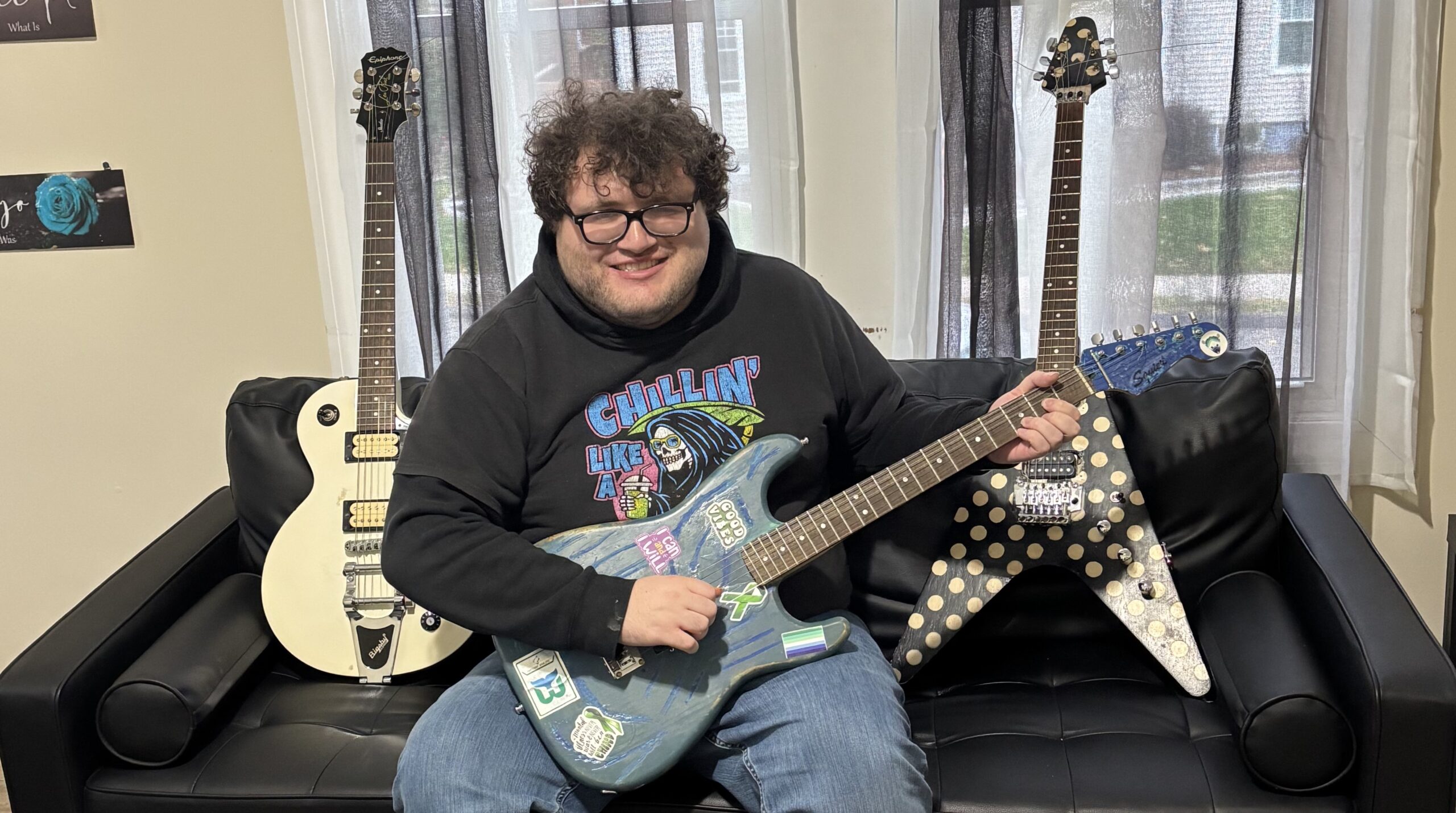
How Sam Built a Vocation from His Curiosity
Sam, a resident in our Danbury-based young adult mental health program, has always been curious about how things work.
“First I was a kid playing with trains, video games, and guitar,” said Sam, 26. “Next I was modifying my game consoles, and then I built a guitar my senior year of high school. I can’t leave anything alone. Anything I buy, I have to mess with it, figure out how it works, and then make it work better.”
With support from Ability Beyond, Sam recently translated his lifelong curiosity into a vocation, earning a certificate in Advanced Manufacturing Machine Technology from CT State Community College. Congratulations, Sam!
“I want to make the most of my time here at Ability Beyond, because it’s a stable environment where I can build toward a more independent future,” Sam said.
A New Beginning
Three years ago, Sam was re-entering the community after hospitalization. He didn’t have a secure place to live or a clear path forward. That’s when he learned about Ability Beyond.
“At first I didn’t want to be here,” Sam said. “But I’ve had to mature, and be okay with things when they don’t go the way they’re supposed to in life.”
In this new chapter, Sam has received consistent, high-quality support from our Assistant Residential Program Managers Cecilia Jackson and Emily Albaron.
“They are really patient, and they go that extra mile for Sam,” said Program Manager Sherese Darity. “When he went back to school, they helped Sam stay on top of his schedule and made sure he had rides in.”
A Knack For It
Advanced manufacturing involves a skilled machinist using a range of dynamic tools to shape large pieces of metal into “whatever they’re supposed to be,” Sam explained.
“Anything that’s metal has to be machined,” Sam said. “Anything you can go and buy in a store had to be made in a factory somewhere, and someone had to set up a machine, and take the product off a machine.”
Prior to incarceration Sam had worked in plastic injection molding, without formal training. It was his “favorite job.” As he re-settled into the community, and a stable home environment with Ability Beyond, he was able to set his sights back on manufacturing.
“I have wanted formal training ever since high school, when I had the chance to take manufacturing but I took electronics instead,” Sam said. “When I learned about the certificate program at CT State Community College, I seized it.”
Sticking With It
The program, which Sam attended on a scholarship, was demanding: two semesters of in-person learning, four days a week, for six hours every day.
Sam was committed to the process, showing up early sometimes and even attaining two additional, related certificates along the way.
He also overcame early challenges. For instance, the safety glasses that Sam had to wear over his prescription glasses didn’t fit well, and they actually made it less safe to machine by obscuring his vision. Ability Beyond collaborated with DHMAS to help Sam attain his own prescription safety glasses, in part by arranging an updated eye exam.
But toward the end of the program, Sam faced major struggles to keep his momentum. “I was letting my life seep into my school work,” he said. “It was kind of hard to get things done.” By his side were Ability Beyond staff members, Sam’s vocational rehabilitation counselor at DHMAS, and Sam’s teacher at CT State Community College.
“There were times Sam felt defeated and discouraged,” Sherese said. “But he kept going, and our staff were there to support and encourage him.”
The Next Project
Now that Sam has earned his certification in advanced machine manufacturing, he’s looking to the future—starting with competitive employment. Other goals include getting back on the road as an independent driver, and transitioning to “even marginally more self-sufficient, independent housing.”
Along the way, Sam has celebrated another manufacturing milestone.
“A highlight of this year is that my dad and I finished building a guitar that we started before incarceration,” he said.
Sam credited the stability and continuity of his home life for his motivation. And his roommates.
“The accountability of living with other people helps,” Sam said. “They don’t want to see a bunch of guitar parts lying around. They want to see a guitar.”